
Month 01 Social Development
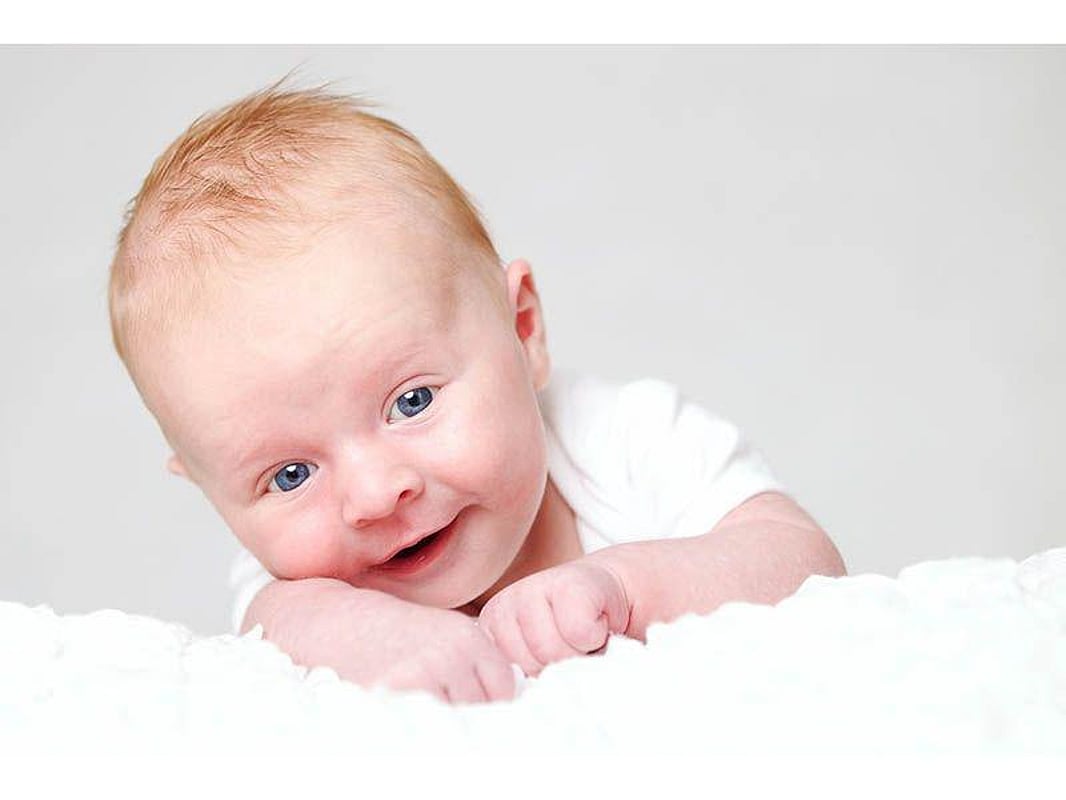
In the first month of life, your baby's social life revolves around you. She's already familiar with your voice, which she could hear from inside the womb. One of her first images is likely to be your face as she is brought to the breast (or bottle). At her age, all she needs for optimum emotional and social development is an attentive parent, lots of touch, and love.
Your baby may spend so much time sleeping that you may feel like you don't get enough time to interact with her. But don't worry -- you'll still have plenty of chances to make her feel loved.
You may notice that your baby spends some of her awake time with her eyes wide open and her body still. This is called the "quiet alert state," and it is in this state that she'll be most receptive to your voice and touch. Talk to your baby using exaggerated, animated facial gestures.
The higher-pitched voice that comes naturally when you use "baby talk" makes you irresistibly exciting. She might also enjoy listening to a rattle or looking at some interesting pictures. Faces are her favorite things to watch, but she's also drawn to high-contrast items such as checkerboards, stripes, and bull's-eyes. If she starts to fuss, yawn, arch her back, or turn away, she's probably feeling over-stimulated and needing a break.
If she's kicking or waving her arms, she's in the active alert state and it's probably best to just watch her and enjoy the show. She's too focused on her body to pay much attention to you.
When she's crying, she won't be interested in toys, pictures, or anything other than her immediate needs. At her age she probably just needs to be held, to be fed, or to have a diaper change. You can't spoil a new baby, so the best thing you can do is try to keep her as comfortable and happy as possible.
But don't overdo it on the play. Newborns mostly need a lot of cuddling and love, not constant stimulation. As you spend time with your baby, you'll learn how much stimulation she is comfortable with. Some newborns are overwhelmed simply by having more than one sense engaged at a time, while others thrive in a more chaotic environment. Pay attention to your baby and tailor your interactions to her temperament.
You may be wondering if the fleeting smile you see while your baby's sleeping is just a grimace caused by gas. Well, according to pediatric specialist Dr. William Sears, sleep grins are in fact true smiles. However, baby is responding to something going on inside of her, such as feelings of contentment, rather than something going on outside of her, such as your coos. Look for interactive social smiles to develop next month.
References
Sears, William & Martha. The Baby Book: Everything you need to know about your baby. From birth to age two. Little, Brown and Co.
Nemours Foundation. Learning, Play, and Your 1- to 3-Month-Old. http://kidshealth.org/parent/pregnancy_newborn/lea...
American Academy of Pediatrics. Caring for Your Baby and Young Child: Birth to Age Five. Bantam Books.
Image credit: Shutterstock
Related Posts
Dos años de inmunoterapia para un cáncer de pulmón avanzado podrían ser suficientes, según un estudio
VIERNES, 9 de junio de 2023 (HealthDay News) -- Las perspectivas de...
AHA News: She Wanted to Thank the Surgeon Who Saved Her Life as a Baby. She Did – As His Colleague.
FRIDAY, May 5, 2023 (American Heart Association News) -- Hours after Sarah...
AHA News: Este procedimiento de extracción de coágulos parece ser seguro en pacientes embarazadas que han padecido un ataque cerebral
LUNES, 20 de septiembre de 2021 (American Heart Association News) -- Extraer...
EPA Plans New Strategy Against Toxic ‘Forever Chemicals’
MONDAY, Oct. 18, 2021 (HealthDay News) -- A new plan to limit pollution from...