
Blood Clots in the Lungs: Consider Surgery Earlier to Help Save Lives
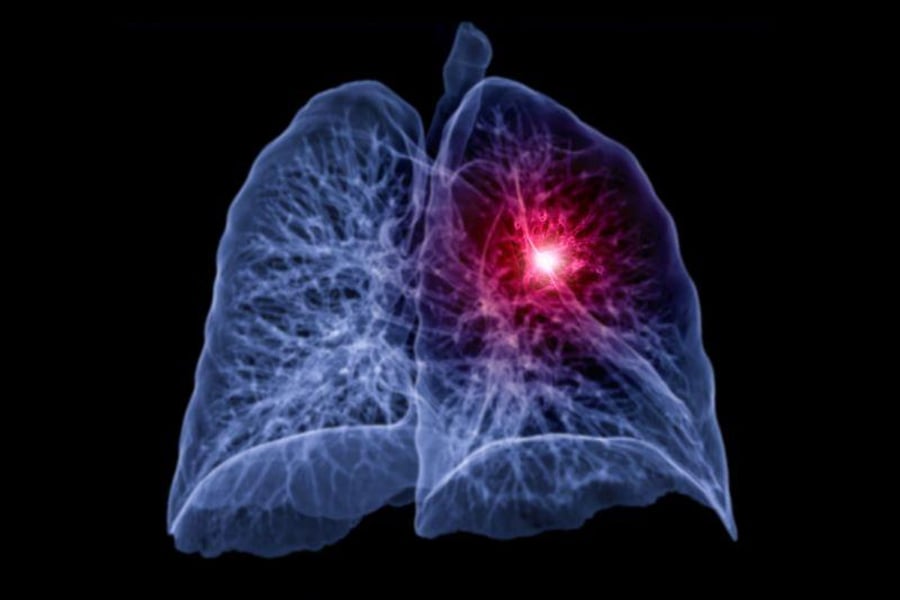
WEDNESDAY, Jan. 25, 2023 (HealthDay News) -- The American Heart Association has issued a new scientific statement on pulmonary embolism (PE), a sometimes fatal condition in which a blood clot travels to the lungs.
The American Heart Association (AHA) statement suggests surgery be considered for more people with high-risk PE.
Refined definitions of risk levels may make it easier to identify which patients would benefit from surgical intervention, the AHA said.
The association also called for development of patient registries to monitor treatment effectiveness for intermediate and high-risk patients, and more education for doctors and surgeons on surgical intervention options.
“This statement demonstrates that modern surgical management strategies and mechanical circulatory support results in excellent survival (97%) even among the sickest patients, including those who present with cardiac arrest and have had CPR,” said Dr. Joshua Goldberg, who led the statement writing group.
“Modern surgical strategies and mechanical circulatory support are drastically underutilized,” Goldberg said in an AHA news release. He's an attending cardiothoracic surgeon at the Westchester Heart and Vascular Center in Valhalla, N.Y.
Goldberg said the statement authors hope it will provide greater awareness of the safety and effectiveness of modern surgical intervention and mechanical circulatory support for the most unstable patients.
“In addition, we hope this statement will facilitate improved understanding of the disease process and effective treatments and encourage future research to improve the survival of patients with this common and deadly disease,” Goldberg said.
Nearly 45% of patients with PE progress to severe symptoms. When that happens, the clot causes high pressure in the lungs and damage to the right heart chamber, with a high risk of death.
Even when current treatment guidelines are followed, the risk is roughly 40% in some groups.
Treatment options for patients include anticoagulation therapy or thrombolysis, breaking up the clots with medications or a catheter procedure. Other options are advanced surgical interventions and mechanical circulatory support.
The statement suggests considering surgery earlier.
The statement was prepared on behalf of the American Heart Association’s Council on Cardiovascular Surgery and Anesthesia; the Council on Arteriosclerosis, Thrombosis and Vascular Biology; the Council on Lifestyle and Cardiometabolic Health; and the Council on Peripheral Vascular Disease.
It was published online Jan. 23 in the AHA's journal, Circulation, and presented simultaneously at a meeting of the Society of Thoracic Surgeons, in San Diego.
More information
The U.S. National Library of Medicine has more on pulmonary embolism.
SOURCE: American Heart Association, news release, Jan. 23, 2023
Related Posts
FDA Approves First Over-the-Counter Birth Control Pill
THURSDAY, July 13, 2023 (HealthDay News) -- The U.S. Food and Drug...
¿Hace la compra en línea? Buena suerte para encontrar la información nutricional
JUEVES, 20 de enero de 2022 (HealthDay News) -- Hacer la compra de la comida en...
Radiographers Read Mammograms for UK Double Reading Program
WEDNESDAY, Sept. 28, 2022 (HealthDay News) -- Trained radiographers perform as...
Continúa el aumento de las ETS en EE. UU.
MARTES, 11 de abril de 2023 (HealthDay News) -- Las infecciones de transmisión...