Study Spots People at High Risk of Severe Breakthrough COVID
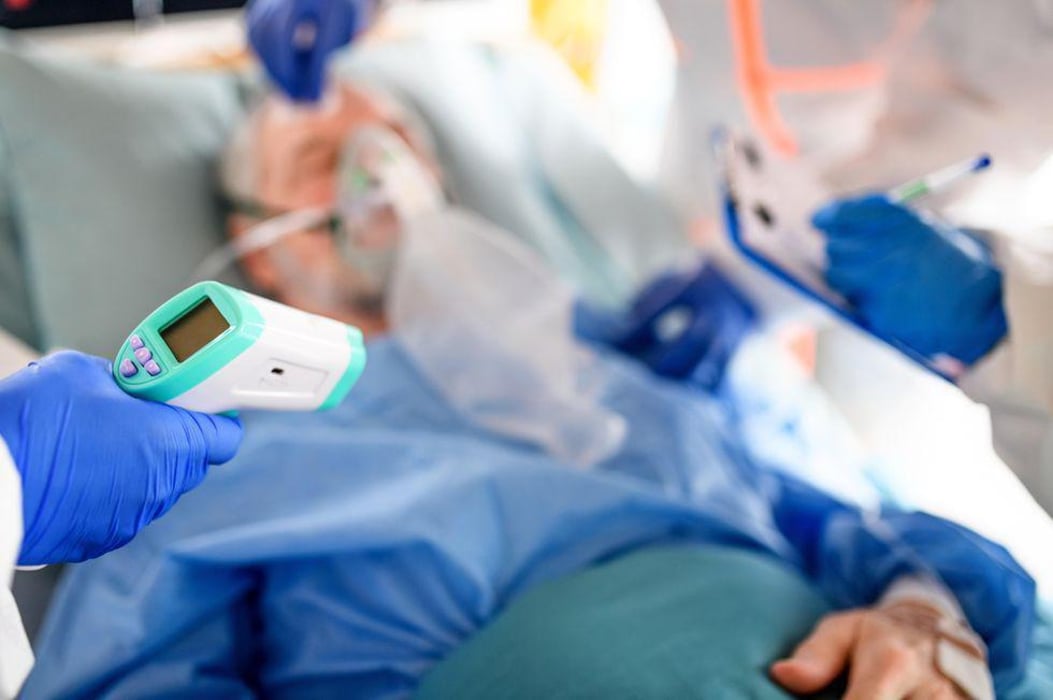
MONDAY, Sept. 20, 2021 (HealthDay News) -- A study of millions of people vaccinated against COVID-19 has identified those at greatest risk of hospitalization and death after breakthrough infection.
The most vulnerable are those who are immunosuppressed from chemotherapy, a recent bone marrow or solid organ transplant, or HIV/AIDS. Also at risk are people with neurological disorders (such as dementia and Parkinson's disease), nursing home residents, and those with chronic disorders (including Down syndrome).
For the report, British researchers updated a tool called QCovid, using datasets from general practice, national COVID-19 vaccination and testing, death registry and hospital data in the United Kingdom. In all, a sample of nearly 7 million vaccinated adults was included, of whom more than 5 million had received both vaccines doses.
The report was published Sept. 17 in the journal BMJ.
"This enormous national study of over 5 million people vaccinated with two doses across the U.K. has found that a small minority of people remain at risk of COVID-19 hospitalization and death. Our risk calculator helps to identify those who remain most at risk post-vaccination," according to researcher Aziz Sheikh. He is a professor of primary care research and development at the University of Edinburgh.
Within the vaccinated group, there were more than 2,000 COVID-19 deaths and nearly 2,000 COVID-19-related hospital admissions, the investigators found. Eighty-one of the deaths and 71 admissions occurred 14 or more days after the second vaccine dose, when substantial immunity is expected.
The researchers also took into account factors such as age, sex, ethnicity and the rate of COVID-19 infections, they noted in a news release from the University of Oxford.
Relatively few COVID-19-related hospitalizations or deaths occurred among those who received a second dose of the vaccine. This means the study lacked the statistical power to determine if the at-risk groups are more, or less, vulnerable after a second vaccine dose, compared with post-first dose.
According to study co-author Julia Hippisley-Cox, a professor of clinical epidemiology and general practice at the University of Oxford, "Individual risk will always depend on individual choices as well as the current prevalence of the disease, however we hope that this new tool will help shared decision making and more personalized risk assessment."
More information
For more on COVID-19, head to the U.S. Centers for Disease Control and Prevention.
SOURCE: University of Oxford, news release, Sept. 17, 2021
Related Posts
No Need to Avoid Exercise After Prolapse Surgery, Study Finds
FRIDAY, June 2, 2023 (HealthDay News) -- It may not be necessary for people who...
La enfermedad cardiaca y las noches de insomnio con frecuencia van de la mano
VIERNES, 8 de abril de 2022 (HealthDay News) -- El insomnio es común en los...
Moderna Says Its Combo Vaccine Effective Against Omicron
TUESDAY, April 19, 2022 (HealthDay News) -- Moderna Inc. announced Tuesday that...
Vials With Smallpox Labels Found at Vaccine Lab in Pennsylvania: CDC
THURSDAY, Nov. 18, 2021 (HealthDay News) -- Several frozen vials that were...