
Oral Contraceptive Use May Increase Risk for Depression
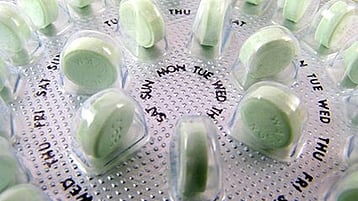
MONDAY, July 17, 2023 (HealthDay News) -- Use of oral contraceptives (OCs), especially the first two years of use, is associated with an increased risk for depression, with the association consistent with a causal relationship, according to a study published online June 12 in Epidemiology and Psychiatric Sciences.
Therese Johansson, from Uppsala University in Sweden, and colleagues estimated the risk for depression associated with initiation of OCs in a population-based cohort study using data from 264,557 women from the U.K. Biobank. Familial confounding was examined in 7,354 sibling pairs to validate causality.
The researchers found that compared with never use, the first two years of OC use were associated with a higher rate of depression (hazard ratio, 1.71). Ever OC use was still associated with an increased lifetime risk for depression, although the risk was not as pronounced beyond the first two years (hazard ratio, 1.05). Compared with never use, previous OC use was associated with a higher rate of depression, with adolescent OC users driving the increased risk (hazard ratio, 1.18). Among adult OC users who previously used OCs, no significant association was observed. Further evidence for a causal effect of OC use on the risk for depression was seen in the sibling analysis.
"It is important to emphasize that most women tolerate OCs well without experiencing adverse mood effects, making them a great option for many," the authors write.
Related Posts
Look Out for the Early Signs of Autism
MONDAY, Jan. 2, 2023 (HealthDay News) -- When children have autism, it's...
HIV Status Does Not Affect Outcomes of Tecovirimat Treatment for Mpox
MONDAY, May 1, 2023 (HealthDay News) -- HIV status seems not to affect treatment...
Repair or Reconstruction: What’s Best for ACL Tears?
MONDAY, July 18, 2022 (HealthDay News) -- Adults who tear a key ligament in the...