
ECG Anomalies May Affect Accuracy of Smartwatch A-Fib Diagnosis
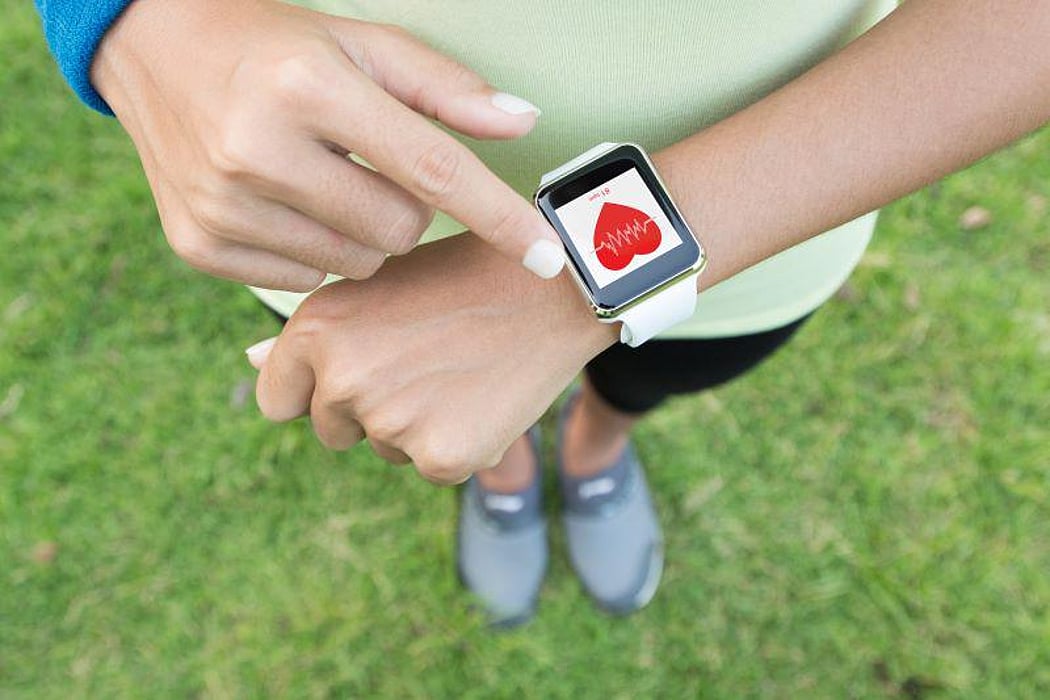
WEDNESDAY, Oct. 12, 2022 (HealthDay News) -- In almost 20 percent of patients, a smartwatch electrocardiogram (ECG) fails to produce an automatic diagnosis, according to a study published online Oct. 12 in the Canadian Journal of Cardiology.
Hugo-Pierre Racine, M.D., from Université Laval in Quebec, Canada, and colleagues included 734 consecutive hospitalized patients aged 18 years or older who underwent 12-lead ECG directly after a 30-second ECG tracing with use of an Apple Watch series 5. Smartwatch ECG recordings were distributed to a blinded electrophysiologist and interpreted as atrial fibrillation ("AF"), "absence of AF," and "diagnosis unclear." Of the patients, 539 were in normal sinus rhythm (SR), 154 in AF, and 33 in atrial flutter or atrial tachycardia.
The researchers found that of the patients in SR, 437 ECG recordings were correctly diagnosed as SR, seven were incorrectly diagnosed as AF, and 95 were not classified. Of the 187 patients in AF, atrial flutter, or atrial tachycardia, 129, 17, and 41 ECG recordings were correctly diagnosed as AF, incorrectly diagnosed as SR, and not classified, respectively. The sensitivity was 88 percent and specificity 98 percent when excluding unclassified ECGs from the analysis. The sensitivity and specificity for AF detection was 69 and 81 percent, respectively, when considering nonclassified ECGs as false results. Overall, 102 patients in SR were classified as AF or inconclusive by the smartwatch. Of these false positives, 26, 19, 19, 17, and 9 percent had sinus node dysfunction, second- or third-degree atrial ventricular block, premature atrial or ventricular contractions, an intraventricular conduction delay, and ventricular paced rhythm, respectively.
"With the growing use of smartwatches in medicine, it is important to know which medical conditions and ECG abnormalities could impact and alter the detection of AF by the smartwatch in order to optimize the care of our patients," a coauthor said in a statement.
Abstract/Full Text (subscription or payment may be required)
Editorial (subscription or payment may be required)
Related Posts
Many People With High Blood Pressure May Take a Drug That Worsens It: Study
MONDAY, Nov. 29, 2021 (HealthDay News) -- Nearly 1 in 5 people with hypertension...
Could COVID Infection After Age 50 Leave You Vulnerable to Shingles?
MONDAY, April 11, 2022 (HealthDay News) -- Catching COVID-19 appears to increase...