
Chemical Contamination on International Space Station Exceeds That Found Back Home
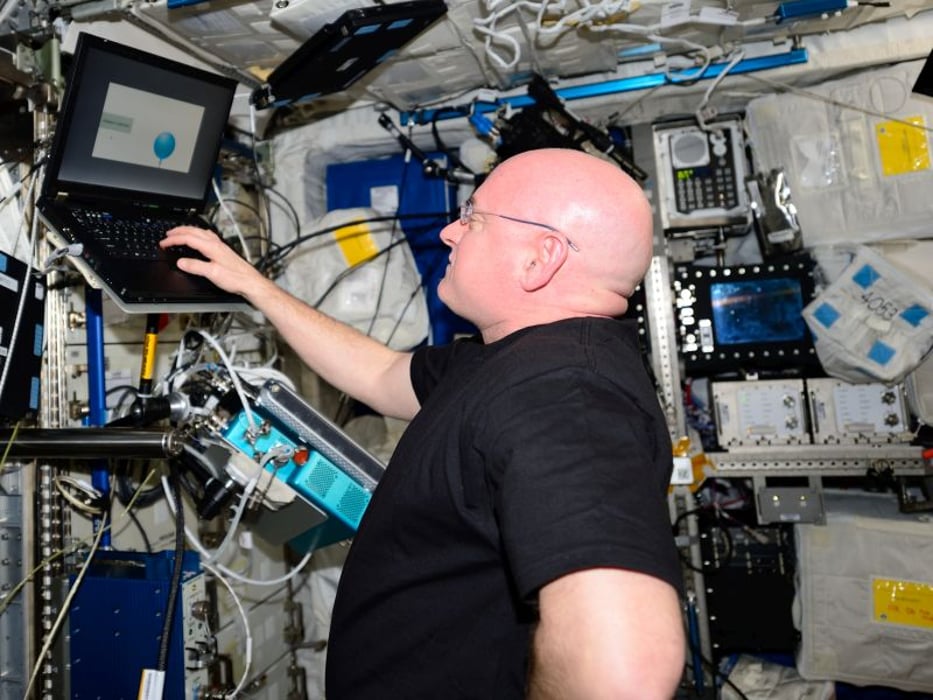
WEDNESDAY, Aug. 9, 2023 (HealthDay News) -- Astronauts aboard the International Space Station (ISS) are living in an environment that contains higher levels of potentially harmful chemicals than seen in American homes, new research reveals.
The discovery is important because it could guide the design of future spacecraft.
“Our findings have implications for future space stations and habitats, where it may be possible to exclude many contaminant sources by careful material choices in the early stages of design and construction,” said study co-author Stuart Harrad, from the University of Birmingham, in the United Kingdom.
“While concentrations of organic contaminants discovered in dust from the ISS often exceeded median values found in homes and other indoor environments across the U.S. and western Europe, levels of these compounds were generally within the range found on Earth,” he explained in a university news release.
Among the contaminants found in this "space dust" were polybrominated diphenyl ethers (PBDEs), hexabromocyclododecane (HBCDD), "novel" brominated flame retardants (BFRs), organophosphate esters (OPEs), polycyclic aromatic hydrocarbons (PAH), perfluoroalkyl substances (PFAS) and polychlorinated biphenyls (PCBs).
BFRs and OPEs are used in many countries to meet fire safety regulations in consumer and commercial applications, such as electrical and electronic equipment, building insulation, furniture fabrics and foams, according to the study.
PAH can be found in hydrocarbon fuels and emitted from combustion processes. PCBs were used in building and window sealants and in electrical equipment. PFAS have been used in stain-proofing agents for fabrics and clothing.
Some of these chemicals have been banned or limited because of their effect on human health, the study authors noted.
The use of commercially available items brought on board by astronauts — such as cameras, MP3 players, tablet computers, medical devices and clothing — are also potential sources for many of the chemicals detected.
The air inside the ISS is constantly recirculated, with about eight to 10 changes per hour, the researchers said.
While there is removal of CO2 and gaseous trace contaminants, it’s not known to what degree this removes chemicals like BFRs, the investigators added.
In the microgravity environment of the ISS, particles float around according to ventilation system flow patterns, eventually depositing on surfaces and air intakes. Screens covering the HEPA filters accumulate this debris, and weekly vacuuming is needed to maintain efficient filtration.
The findings were published Aug. 8 in the journal Environmental Science and Technology Letters.
More information
The U.S. National Institutes of Health has more on air pollution and health.
SOURCE: University of Birmingham, news release, Aug. 8, 2023
Related Posts
El aire contaminado puede empeorar los resultados de la COVID
MARTES, 31 de mayo de 2022 (HealthDay News) -- La forma en que el virus de la...
El riesgo de problemas de la vista aumenta en los niños con diabetes tipo 2
JUEVES, 9 de diciembre de 2021 (HealthDay News) -- Una afección conocida como...
AHA News: Newlywed Had Stroke at 27 – And Still Doesn’t Know Why
FRIDAY, Feb. 11, 2022 (American Heart Association News) -- A week after her...
U.S. Surgeon General Warns That Social Media Can Harm Teens’ Mental Health
TUESDAY, May 23, 2023 (HealthDay News) -- Social media presents a "profound...