
AI Tool May Help Predict Risk for Pancreatic Ductal Adenocarcinoma
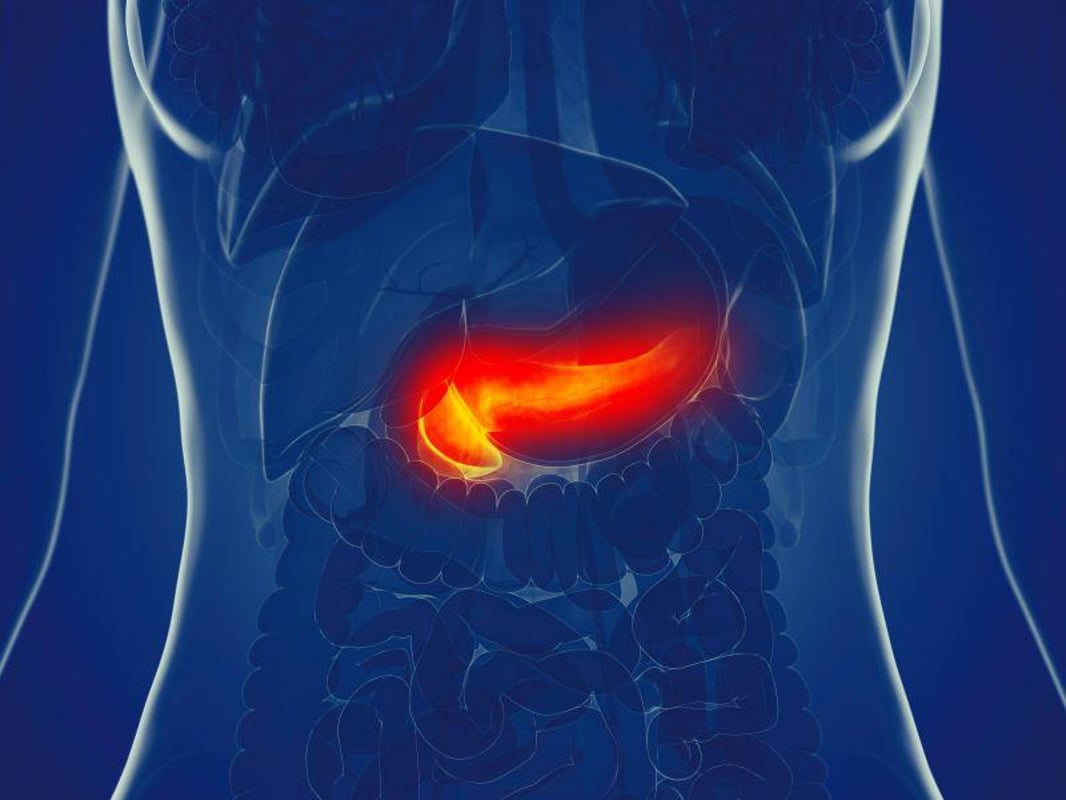
MONDAY, May 2, 2022 (HealthDay News) -- An artificial intelligence tool can analyze computed tomography (CT) scans of the abdomen to predict risk for developing pancreatic ductal adenocarcinoma (PDAC), according to a study published online April 28 in Cancer Biomarkers.
Touseef Ahmad Qureshi, Ph.D., from Cedars-Sinai Medical Center in Los Angeles, and colleagues developed a tool to stratify individuals at high risk for PDAC by identifying predictive features in prediagnostic abdominal CT scans. A set of CT features was identified in an analysis of 4,000 raw radiomic parameters extracted from prediagnostic scans of pancreases. A naive Bayes classifier was developed for automatic classification of the scans at high PDAC risk. The study included 108 retrospective CT scans (36 each from healthy control, prediagnostic, and diagnostic groups). The model was developed on 66 multiphase scans, and external validation was performed on 42 venous-phase scans.
The researchers found that on the external dataset, the system achieved an average classification accuracy of 86 percent.
"Our hope is this tool could catch the cancer early enough to make it possible for more people to have their tumor completely removed through surgery," Qureshi said in a statement.
Related Posts
America’s Emergency Physicians Warn of Surge in Patients Due to ‘Tripledemic’
MONDAY, Nov. 14, 2022 (HealthDay News) -- Emergency departments are backed up...
Maker of Wegovy Limits Supply of Obesity Drug in U.S.
FRIDAY, May 5, 2023 (HealthDay News) – Danish drugmaker Novo Nordisk said...
Unos arqueólogos descubren evidencias de una amputación quirúrgica de hace 30,000 años
LUNES, 12 de septiembre de 2022 (HealthDay News) -- El esqueleto de un adulto...
Biden Makes National Push for ‘Long COVID’ Research
WEDNESDAY, April 6, 2022 (HealthDay News) -- President Joe Biden on Tuesday...