
Acupressure Aids Self-Reported Sleep Disturbances in Cancer Patients
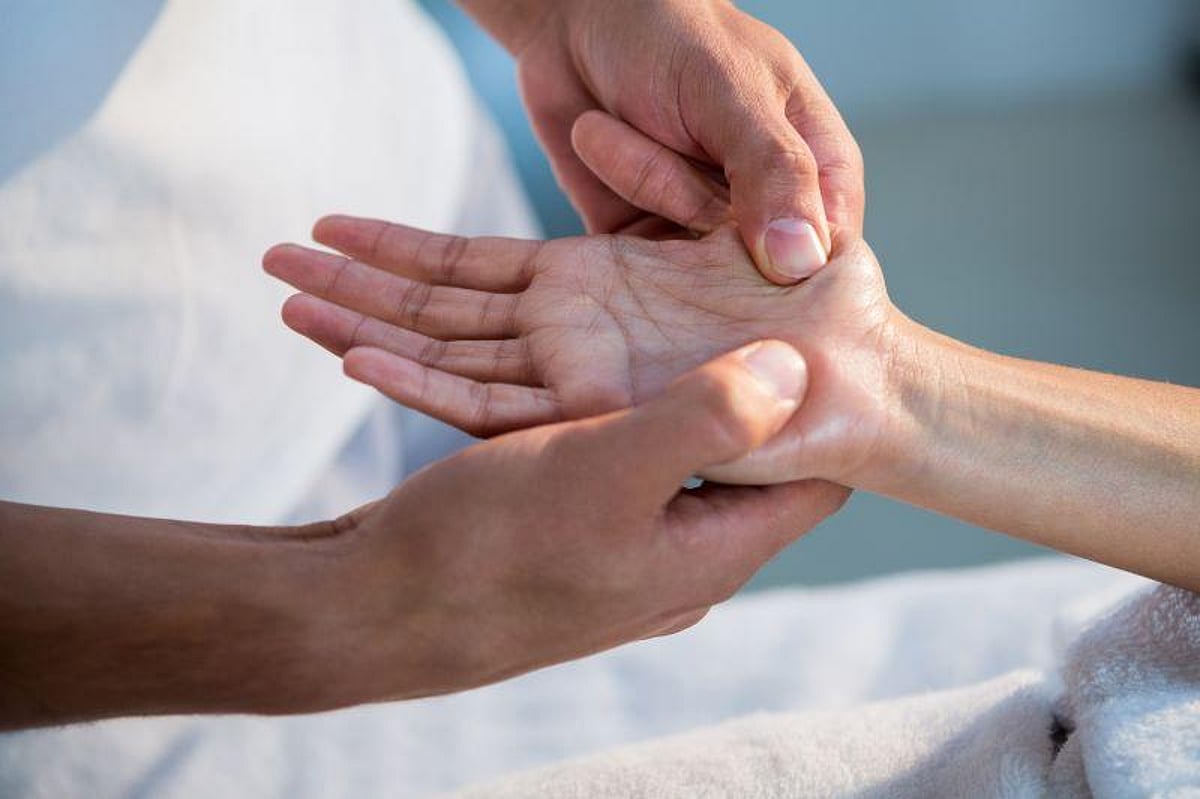
TUESDAY, Dec. 27, 2022 (HealthDay News) -- Acupressure may be better than acupuncture for reducing sleep disturbance in cancer patients, according to a systematic review and network meta-analysis published online Dec. 21 in Worldviews on Evidence-Based Nursing.
Denise Shuk Ting Cheung, Ph.D., from the University of Hong Kong, and colleagues conducted a systematic literature review to assess the comparative effectiveness of acupuncture and acupressure on sleep in cancer patients. The reviewed studies covered six interventions (manual acupuncture, electroacupuncture, acupressure, sham, enhanced usual care, and no treatment).
Based on 24 randomized controlled trials (2,002 cancer patients), the researchers found that acupressure demonstrated the largest effect size for reducing self-reported sleep disturbance compared with enhanced supportive care. Acupuncture and electroacupuncture also demonstrated an effect.
"Based on available evidence, acupressure may be a more promising approach than acupuncture for reducing sleep disturbance in patients with cancer," corresponding author Denise Shuk Ting Cheung, Ph.D., R.N., of the University of Hong Kong, said in a statement. "Future studies should focus on the differential mechanisms of action of acupressure and acupuncture and link them to the multifactorial causes of sleep disturbance in patients with cancer."
Abstract/Full Text (subscription or payment may be required)
Related Posts
Racial Disparities in Stroke Mortality Increased During Pandemic
MONDAY, April 24, 2023 (HealthDay News) -- The difference in age-adjusted stroke...
Lidocaine Infusions May Ease Tough-to-Treat Migraines
THURSDAY, May 26, 2022 (HealthDay News) -- A multi-day intravenous infusion of...
Obesity Stigma Keeps Many From Life-Saving Cancer Screening: Study
THURSDAY, May 19, 2022 (HealthDay News) -- Many people who are overweight or...
Sample-to-Answer, Point-of-Care HPV DNA Test Feasible
TUESDAY, June 27, 2023 (HealthDay News) -- A sample-to-answer, point-of-care...