
One-Quarter of Older Advanced Cancer Patients Taking Eight or More Drugs
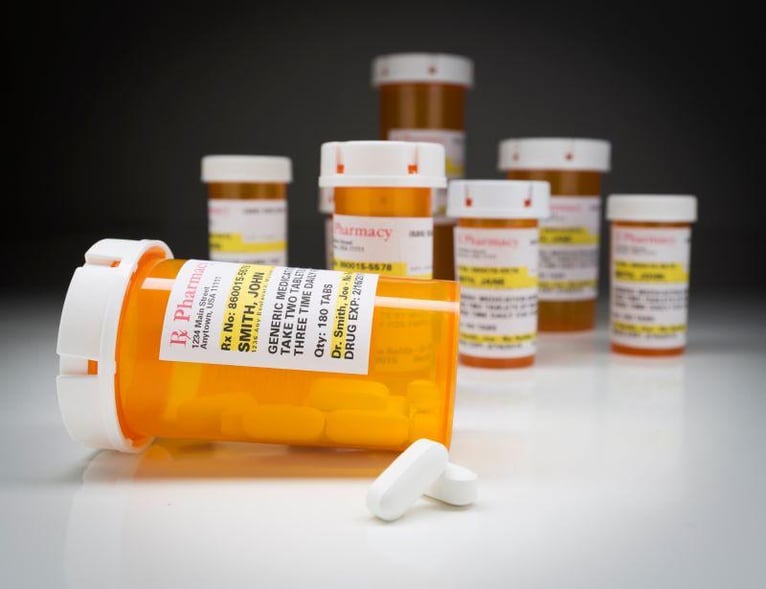
MONDAY, March 20, 2023 (HealthDay News) -- Among older adults with advanced cancer, polypharmacy and potential drug-drug interactions are associated with an increased risk for adverse treatment outcomes, according to a study published in the April 1 issue of Cancer.
Mostafa R. Mohamed, M.B.B.Ch., from the University of Rochester in New York, and colleagues evaluated the association of medication measures with adverse outcomes in older adults with advanced cancer who were receiving systemic therapy. The analysis included 718 patients from the GAP 70+ Trial (aged 70 years and older) with advanced cancer who planned to start a new treatment regimen.
The researchers found that the median number of medications was five (range, 0 to 24 medications). More than one-quarter of patients (28 percent) received eight or more medications, 67 percent received one or more potentially inappropriate medications, and 25 percent had one or more major potential drug-drug interactions. In patients with polypharmacy, the mean number of grade ≥2 toxicities was 9.8 versus 7.7 in those without polypharmacy (adjusted β = 1.87), while the mean number of grade ≥3 toxicities was 2.9 versus 2.2 in patients without polypharmacy (adjusted β = 0.59). Odds of early treatment discontinuation were higher among patients with one or more major potential drug-drug interaction (odds ratio, 1.59).
"Providing meaningful screening and interventional tools to optimize medication use may improve treatment-related outcomes in these patients," the authors write.
Related Posts
DDW: Cannabinoid Use Ups Sedation Requirements During Endoscopy
THURSDAY, May 26, 2022 (HealthDay News) -- Baseline cannabinoid use is...
Health Highlights: June 23, 2022
Acupuncture may ease tension headaches. People who got 20 true acupuncture...
Overtreatment of T2DM Common Among VA Nursing Home Residents
FRIDAY, March 25, 2022 (HealthDay News) -- Nursing home residents are often...
AACR Cancer Progress Report Reveals 33 Percent Decrease in Cancer Death Rate, 1990 to 2020
WEDNESDAY, Sept. 13, 2023 (HealthDay News) -- The age-adjusted overall cancer...