
Moderna’s Booster Shot Prompts Strong Immune Response Against Omicron Subvariants
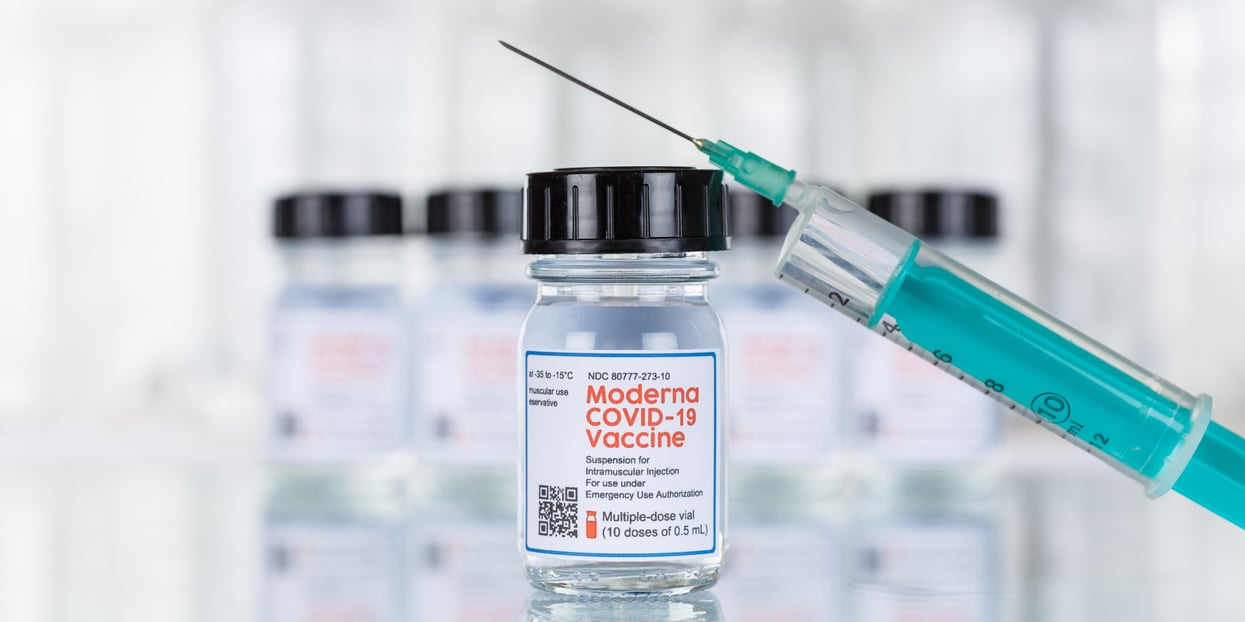
MONDAY, Nov. 14, 2022 (HealthDay News) -- Moderna, Inc., announced Monday that its updated booster shot triggers strong antibody responses against three Omicron subvariants.
"We are pleased to see that both of our bivalent booster vaccine candidates offer superior protection against Omicron BA.4/BA.5 variants compared to our original booster, which is encouraging given COVID-19 remains a leading cause of hospitalization and death globally. In addition, the superior response against Omicron persisted for at least three months," Moderna CEO Stéphane Bancel said in a news release.
"Our bivalent boosters also show... neutralizing activity against BQ.1.1, an increasingly dominant emerging variant, confirming that updated vaccines have the potential to offer protection as the virus continues to evolve rapidly to escape our immunity," Bancel added.
Taken together, about 45% of all new COVID-19 cases were one of these subvariants, according to the U.S. Centers for Disease Control and Prevention.
Moderna tested the blood of 511 adult volunteers who had received the booster, comparing their results to others who had a booster of the original vaccine.
The investigators found antibodies that were about fivefold higher in those who had a booster and a previous COVID-19 infection and sixfold higher in those without a documented infection.
The company also assessed 40 volunteers for antibodies against the subvariant BQ.1.1. They found “robust neutralizing activity,” though less so than against the other variants.
The results on BA.4 and BA.5 immunity have not been published in a peer-reviewed journal, but they are similar to those announced earlier this month by Pfizer Inc. on its updated booster shot.
Whether these increased antibody levels will mean stronger protection against the virus is still unclear.
“Do these vaccines bring back durable protection against infection and onward transmission of SARS-CoV-2 [COVID], and if so, for how long?” said Dr. Isaac Bogoch, an infectious disease specialist at the University of Toronto, according to NBC News.
More information
The U.S. Centers for Disease Control and Prevention has more on COVID-19 vaccines.
SOURCES: Moderna Inc., news release, Nov. 14, 2022; NBC News
Related Posts
Diversity in Early-Phase Cancer Trials Improved Since 2000
TUESDAY, Oct. 3, 2023 (HealthDay News) -- There have been some increases in...
Las chicas con diabetes tipo 2 tienen un riesgo más alto de quistes ováricos
MIÉRCOLES, 16 de febrero de 2022 (HealthDay News) -- La epidemia de obesidad...
In Twins Study, Concussions in Early Life Tied to Memory Issues Decades Later
THURSDAY, Sept. 7, 2023 (HealthDay News) -- Your thinking and memory skills may...
New Type of Treatment Tackles Tough-to-Treat Prostate Cancer
THURSDAY, July 13, 2023 (HealthDay News) -- A preclinical study offers a...