
Bald Truth: Mouse Study May Get at Roots of Hair Loss
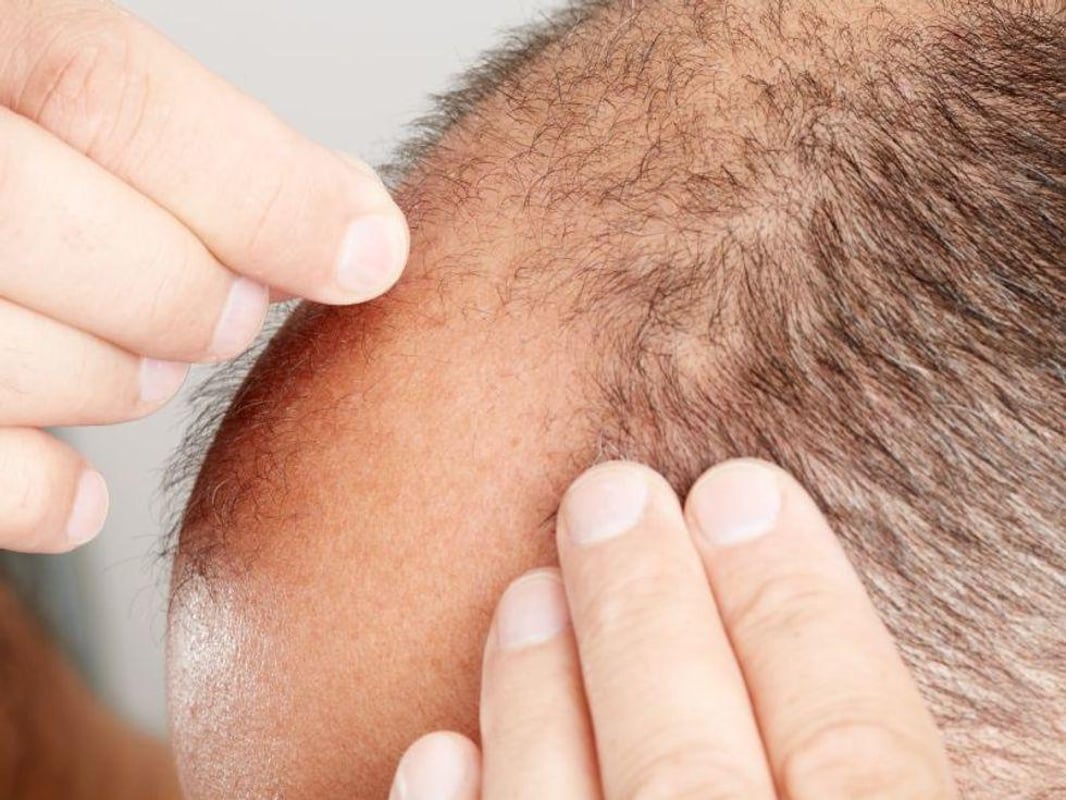
THURSDAY, Oct. 28, 2021 (HealthDay News) -- New research in mice may provide clues to age-related hair loss in men and women.
Scientists found that as hair stem cells in mice age, they lose the stickiness that keeps them secured inside the hair follicle. This allows the stem cells to drift away from the follicle.
"The result is fewer and fewer stem cells in the hair follicle to produce hair," said study lead author Rui Yi, a professor of pathology at Northwestern University Feinberg School of Medicine, in Chicago. This leads to thinning hair and baldness during aging, he noted.
The researchers also identified genes that may regulate hair stem cell adhesion. And they created mice that lacked two of the genes, FOXC1 and NFATC1.
The mice without those genes started losing hair rapidly at four months and were completely bald within 12 to 16 months, according to the study. The results were published in October in the journal Nature Aging.
Mice and humans share many similarities in hair and stem cells, so these finding may apply to older men and women with thinning hair, Yi suggested. However, research in animals doesn't always pan out in humans.
"We believe this stem cell escape mechanism has never been reported before, because nobody could track the aging process in live animals," Yi said in a university news release.
It was known that hair follicles shrink with age, but it wasn't clear how that happened. Many experts believed it was due to cell death or cells' inability to divide as they age.
"We discovered, at least in part, it is due to hair follicle stem cells migrating away from their niche," Yi said. Noting that cell death also occurred during their observation, he added, "Our discovery doesn't dispute existing theories but provides a new mechanism."
In a new study, the researchers are trying to reinstate the FOXC1 and NFATC1 genes to find out if doing so will reverse hair loss.
More information
The American Academy of Dermatology Association has more on hair loss.
SOURCE: Northwestern University, news release, Oct. 26, 2021
Related Posts
Can Llama Antibodies Fight COVID in Humans? New Research Says They Might
THURSDAY, Sept. 23, 2021 (HealthDay News) -- The future of COVID-19 treatments...
Holiday Kitchen Accident? Here’s How to Treat Minor Cuts, Burns
SATURDAY, Dec. 10, 2022 (HealthDay News) -- From burns to cuts, kitchen...
Out-of-State Residents Can Now Seek Medical Aid in Dying in Oregon
TUESDAY, March 29, 2022 (HealthDay News) -- Oregon will no longer require...
Pot Use in Pregnancy May Harm the Fetus
TUESDAY, Nov. 16, 2021 (HealthDay News) -- Marijuana use in pregnancy may...