
Urinary Biomarkers Can Differentiate IC/BPS From Other LUTDs
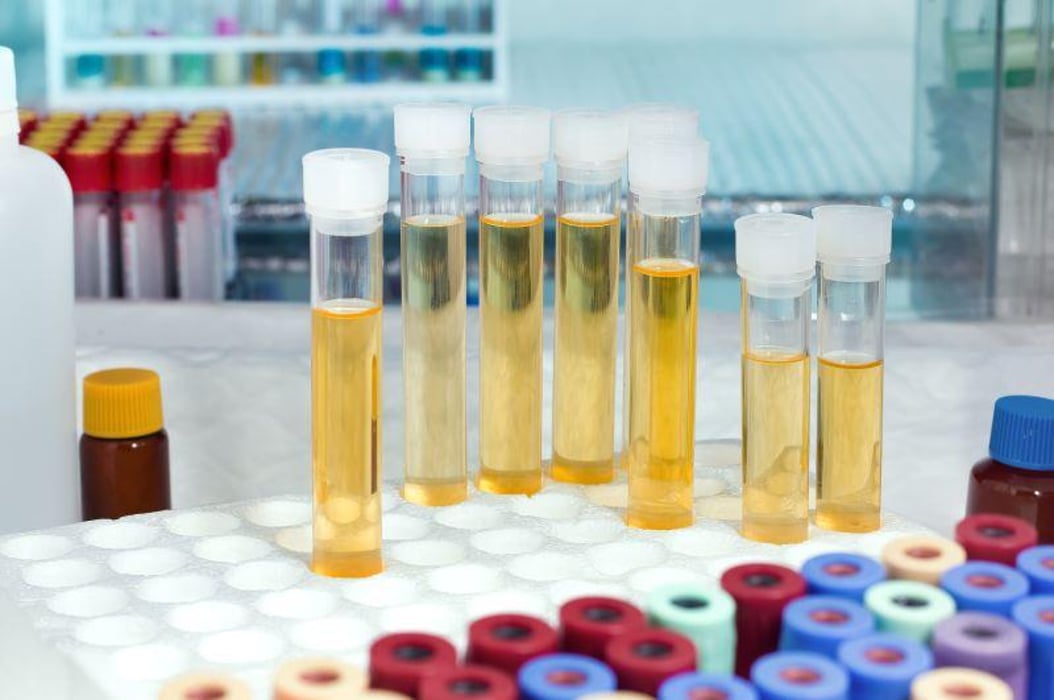
WEDNESDAY, Sept. 6, 2023 (HealthDay News) -- Urinary biomarkers can differentiate interstitial cystitis/bladder pain syndrome (IC/BPS) from other lower urinary-tract dysfunctions (LUTDs) in male patients, according to a study published online July 27 in the International Journal of Molecular Sciences.
Wan-Ru Yu, from the Buddhist Tzu Chi General Hospital in Taiwan, and colleagues enrolled 198 men with lower urinary tract symptoms and collected urine samples before medical treatment to analyze urinary biomarkers that could differentiate IC/BPS from other LUTDs. The urine samples were examined for 11 urinary inflammatory biomarkers (eotaxin, interleukin [IL]-6, IL-8, C-X-C motif chemokine ligand 10, monocyte chemoattractive protein-1 [MCP-1], macrophage inflammatory protein-1β, RANTES, tumor necrosis factor [TNF]-α, nerve growth factor, brain-derived neurotrophic factor, and prostaglandin E2) and three oxidative stress biomarkers (hydroxy-2-deoxyguanosin [8-OHdG], 8-isoprostane, and total antioxidant capacity [TAC]).
Among the patients, IC/BPS was diagnosed in 48, bladder-outlet obstruction (BOO) in 66, detrusor overactivity (DO) in 25, hypersensitive bladder (HSB) in 27, and poor relaxation of the external sphincter in 15; 17 patients were normal. The researchers found that compared with all other LUTD subgroups, patients with IC/BPS had significantly higher levels of eotaxin, MCP-1, TNF-α, 8-OHdG, and TAC. The highest sensitivity, specificity, positive predictive value, and negative predictive value for discriminating IC/BPS from all other LUTD subgroups and the BOO, DO, or HSB subgroups was seen for TNF-α and eotaxin, alone or in combination. MCP-1, 8-OHdG, and TAC did not have a diagnostic value between male patients with IC/BPS and the BOO, DO, or HSB subgroups.
"Male patients with IC/BPS had higher inflammatory urinary biomarkers eotaxin and TNF-α than that in patients with BOO, DO, and HSB, indicating that the IC symptoms are associated with a higher inflammatory condition of the urinary bladder," the authors write.
Abstract/Full Text (subscription or payment may be required)
Related Posts
AHA News: 12-Year-Old Calls 911 During Dad’s Heart Attack
FRIDAY, Sept. 10, 2021 (American Heart Association News) -- On a frigid morning...
Anemia Remains Considerable Global Health Challenge
THURSDAY, Aug. 10, 2023 (HealthDay News) -- Anemia remains a considerable global...
Otro beneficio de la dieta mediterránea: un esperma más sano, una mejor fertilidad
LUNES, 19 de diciembre de 2022 (HealthDay News) -- Añada unas mayores...
FDA Panel Backs First RSV Vaccine Given in Pregnancy to Protect Infants
THURSDAY, May 18, 2023 (HealthDay News) -- The first vaccine designed to protect...