
Mobile Device May ID Wound Infections Earlier
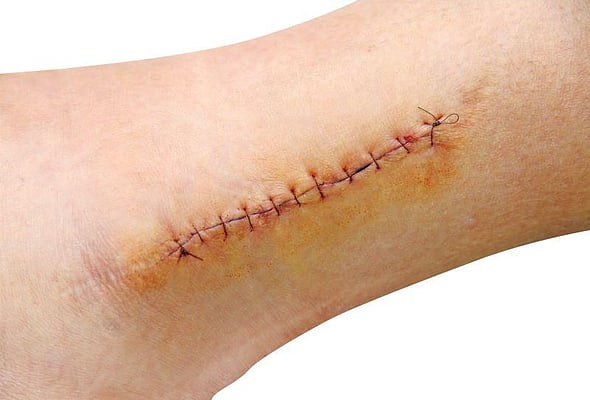
WEDNESDAY, Aug. 30, 2023 (HealthDay News) -- A mobile device that combines photographs, infrared thermography images, and bacterial fluorescence images may improve detection of wound infections, according to a study published online Aug. 24 in Frontiers in Medicine.
Jose L. Ramirez-GarciaLuna from McGill University in Montreal, and colleagues assessed the efficacy of the Swift Ray 1, which can be attached to a smartphone and connected to the Swift Skin and Wound software, to take hyperspectral images that collect visible light, thermography images, and bacterial fluorescence images. Trained surgeons used the device on 66 outpatient wound care patients in Mexico and Canada.
The researchers found that the mobile device could accurately predict all three wound classes (infected, inflamed, and noninfected) with an accuracy of 74 percent. Performance was best on infected wounds (100 percent sensitivity and 91 percent specificity) versus noninflamed wounds (94 percent sensitivity and 70 percent specificity) and inflamed wounds (85 percent sensitivity and 77 percent specificity).
“Enabling clinicians to use point-of-care hyperspectral imaging may allow earlier infection detection and intervention, possibly preventing delays in wound healing and minimizing adverse events,” the authors write.
Several authors disclosed ties to Swift Medical, Inc., the device maker.
Related Posts
Una inmensa masa de sargazo se dirige a la costa de Florida, y pone la salud en peligro
VIERNES, 26 de mayo de 2023 (HealthDay News) -- Cuando vaya a las playas de...
COVID Vaccine Is a Big Stress-Reliever, Too: Study
THURSDAY, Feb. 17, 2022 (HealthDay News) -- While getting a COVID-19 vaccine...
AHA News: Could the Path to Better Brain Health Involve Better Mouth Care?
MONDAY, Nov. 1, 2021 (American Heart Association News) -- Fresh breath, a pretty...
Should Parents Who Break School Drop-Off Rules Be Banned from the Parking Lot?
Was this page helpful?